
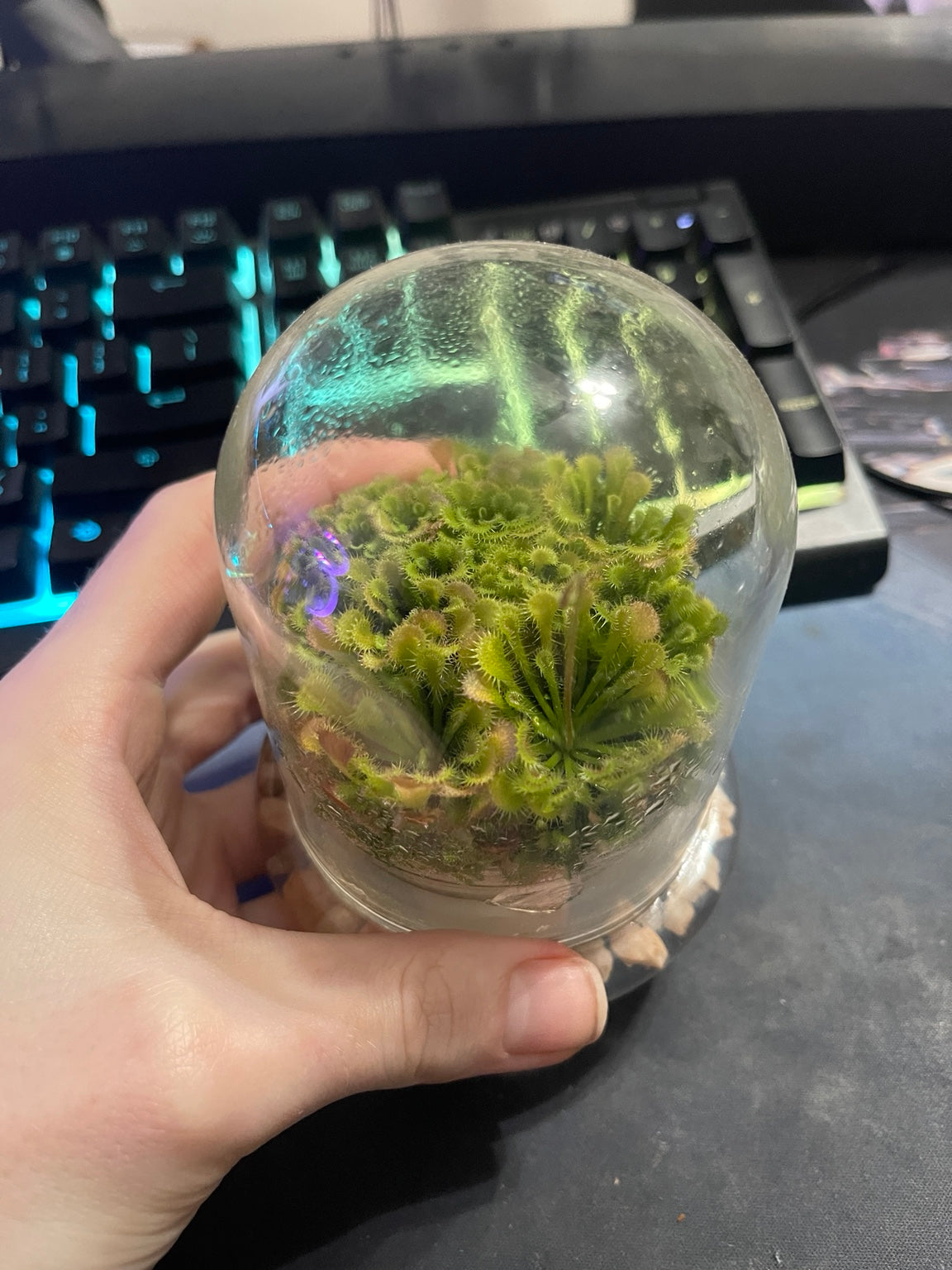
The sparkling droplets on a Drosera are sticky mucilage produced by glands on the leaves. Healthy actively growing sundews normally produce visible dew, but loss of dew can happen for several reasons.
Not enough light
Weak light is one of the first things to investigate. Many commonly grown sundews need much stronger light than a typical low-light houseplant. Under inadequate light, growth can become pale or stretched and dew production may be poor.
Recent shipping or a sudden move
A plant that was boxed, handled, or moved between very different humidity and light levels may temporarily lose its dew. Existing leaves can remain unattractive even after conditions improve. Watch the newest leaves for recovery rather than expecting damaged leaves to become perfect again.
Dry air and heat
Very dry air, hot airflow from a vent, or excessive leaf temperature can make droplets disappear faster and stress the plant. Humidity can help, but simply enclosing a plant in hot stagnant air is not a good solution.
Root-zone problems
Most commonly grown bog sundews need consistently moist low-mineral media. If the pot dries badly, or if mineral-rich water has accumulated salts in the mix, the plant can stop producing normal leaves and dew.
Dormancy or seasonal change
Some Drosera naturally reduce or replace their carnivorous leaves during dormancy. A temperate sundew forming a hibernaculum is not supposed to look like a summer plant. Identify the species before trying to “fix” seasonal behavior.
Recovery checklist
- Provide species-appropriate strong light.
- Use low-mineral water.
- Keep bog species appropriately moist.
- Avoid sudden environmental swings.
- Check new growth for pests.
Dew often returns on new leaves once the real stressor is corrected. Give the plant enough time to produce foliage adapted to the improved conditions.