
“Sphagnum” can refer to several very different horticultural materials. Understanding the difference helps you choose media that provides the right balance of moisture and air for a carnivorous plant.
Live sphagnum
Live Sphagnum is the actively growing moss. It can create an attractive living top layer and, in suitable conditions, can be used as part of the growing medium. It likes clean low-mineral water and enough light to remain healthy. It can also grow rapidly and bury small carnivorous plants if it is not trimmed.
Long-fiber sphagnum
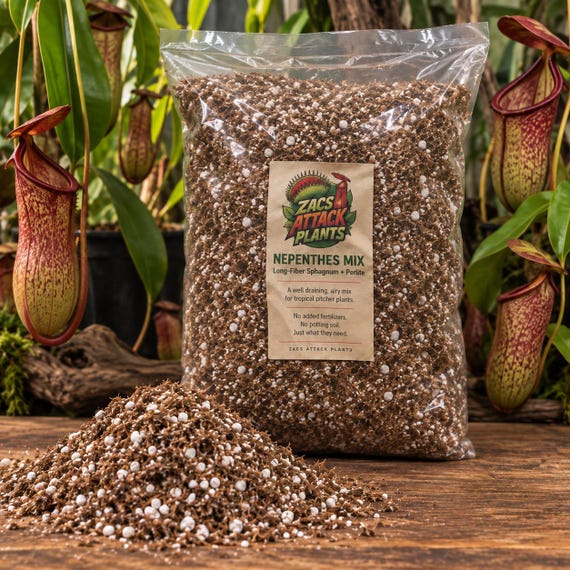
Dried long-fiber sphagnum, often abbreviated LFS, retains the recognizable strands of the moss. When rehydrated it holds a large amount of water while still allowing air spaces if it is packed loosely. It is widely used for Nepenthes and for propagation, although exact mixes vary by species and grower.
Sphagnum peat moss
Peat is much more decomposed material harvested from peatlands. It has a fine texture and holds water well. Peat is commonly used in mixes for Venus flytraps, Sarracenia, and many sundews, often combined with perlite or suitable silica sand to improve structure.
They are not interchangeable in every recipe
A pot of coarse long-fiber sphagnum behaves very differently from a pot of dense peat. If a care guide specifies one, substituting the other can change drainage, water retention, and root aeration.
Avoid fertilizer additives
Some retail moss or potting products contain added fertilizer or wetting agents. Read the label before using them for carnivorous plants. Plain material without added nutrients is the safer starting point unless you are following a specific cultivation method.
There is no universal “best sphagnum.” Choose the material based on the plant's root needs, your watering style, and the conditions in which the pot will actually grow.