
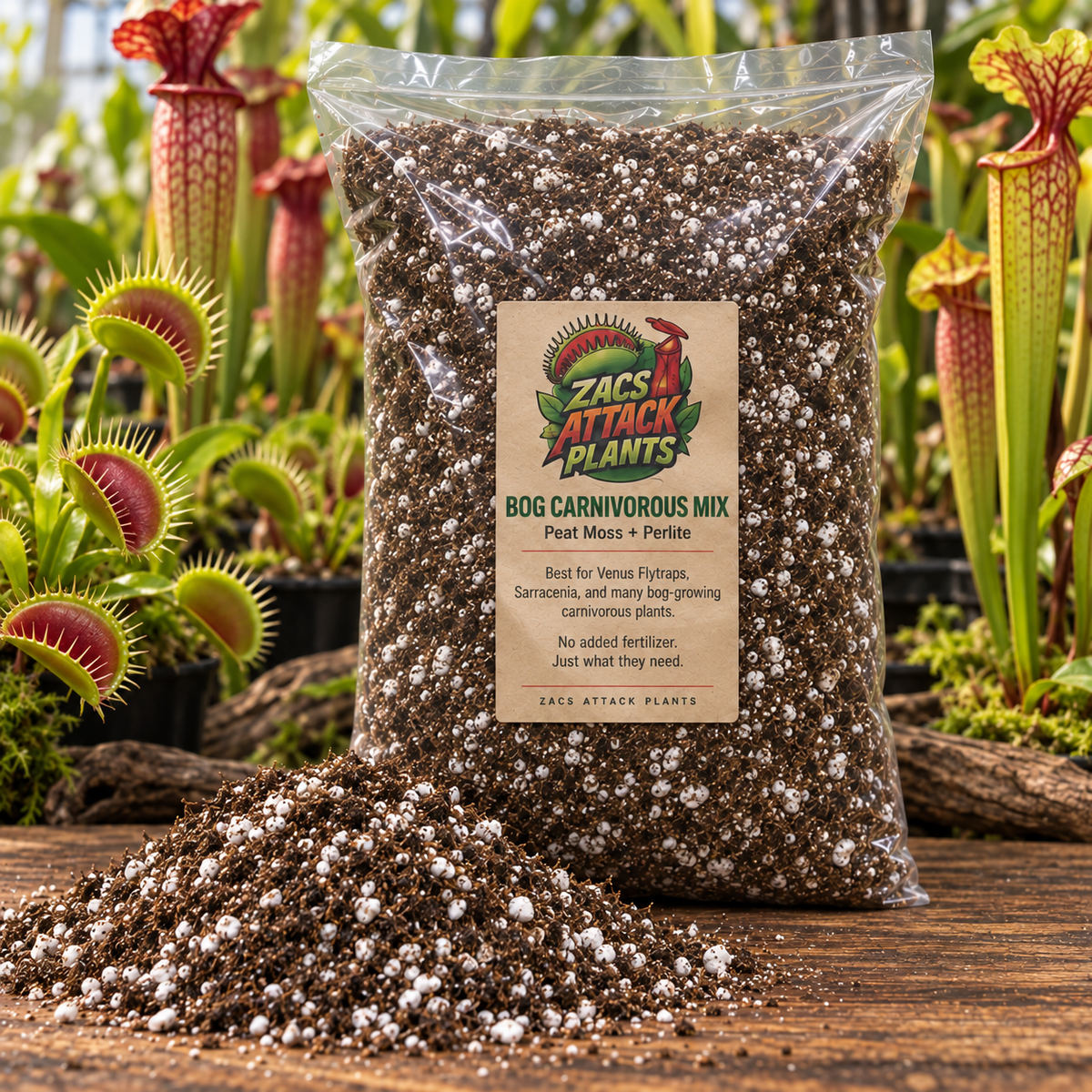
Perlite is a lightweight expanded volcanic material used in horticulture to create air space and improve drainage. It does not replace the moisture-holding part of a carnivorous-plant mix, but it can help keep peat or sphagnum from becoming overly dense.
Why growers use perlite
Fine organic media can settle and compact over time. Mixing in perlite increases pore space, helping water move through the pot while leaving oxygen around the roots. This is useful in many mixes for Venus flytraps, Sarracenia, sundews, and Nepenthes, although the ideal ratio varies by plant and growing setup.
Use plain horticultural perlite
Read the package before using it. Some retail products are sold with added fertilizer or other amendments for ordinary houseplants. Carnivorous plants are sensitive to excess dissolved nutrients, so plain perlite without added fertilizer is the safer choice.
Rinse the dust
Dry perlite can be dusty. Wet or rinse it before mixing, work where there is good ventilation, and avoid breathing airborne dust. Rinsing also helps remove loose fine particles before they enter the pot.
Perlite floats
Because it is very light, pieces can rise to the surface in tray-watered pots or during heavy watering. That is normal and does not mean the mix has failed. A gentle top watering technique can reduce how much material moves around.
Not every plant needs the same mix
A bog-growing Sarracenia, a tropical Nepenthes, and a tuberous Drosera have different root environments. Perlite is a component, not a universal recipe. Start with a mix known to work for the species and adjust only when you understand how your humidity, pot size, and watering affect it.
The main goal is simple: use clean, nutrient-free ingredients to create the moisture and aeration the plant actually needs.