
Nepenthes like reliable moisture, but most are not grown the same way as tray-watered bog plants such as many Sarracenia and sundews. Their roots also need air. The easiest goal to remember is moist and airy, not bone dry and not permanently waterlogged.
Water thoroughly, then let excess drain
Water from the top until the media is evenly moistened and excess water can leave the pot. A pot with drainage holes is important. Do not assume a plant needs more water just because the surface looks slightly dry; check the moisture deeper in the mix and consider how quickly your particular pot dries.
Media changes the schedule
Long-fiber sphagnum can hold a large amount of water while still containing air when it is not packed too tightly. Bark, perlite, and other coarse components can increase drainage and aeration. A small pot in warm moving air may need water much more often than a large pot in a cool humid enclosure.
That is why a rigid rule such as “water every three days” is less useful than learning how your media behaves.
Use low-mineral water when possible
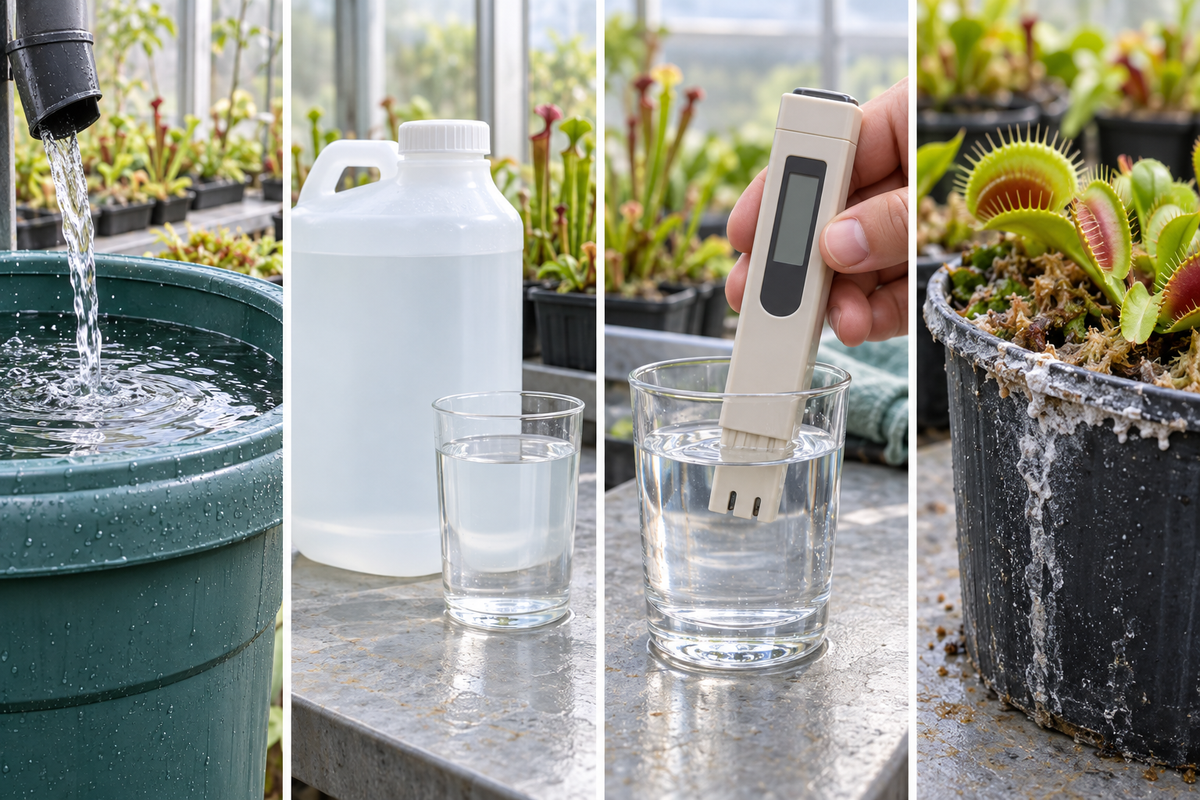
Carnivorous plants are generally adapted to nutrient-poor conditions. Rainwater, distilled water, and properly functioning reverse-osmosis water are common choices because they reduce mineral accumulation in the media. If you use another water source, know its mineral content rather than assuming clear-looking water is suitable.
Warning signs
- Chronic saturation: sour media, declining roots, persistent yellowing, or a plant that stays limp despite wet media can point to root trouble.
- Too dry: limp leaves, rapidly drying tendrils, and a very light pot can signal insufficient water.
- Normal variation: an older leaf yellowing by itself is not proof of a watering problem.
When correcting a problem, change one factor at a time when possible. A stressed Nepenthes is usually better served by stable moisture, good drainage, and time than by repeated emergency watering or repotting.