
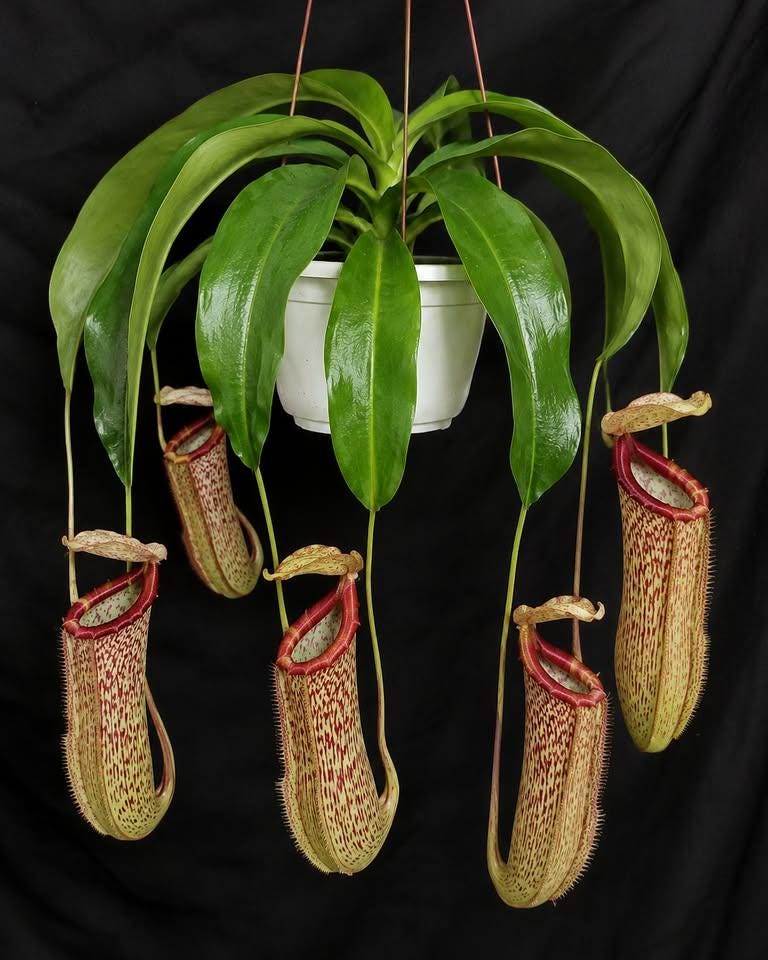
“Highland” and “lowland” are useful Nepenthes growing labels, but they are not exact temperature recipes. They describe broad ecological patterns tied largely to elevation, and individual species, local populations, and hybrids can differ significantly.
Lowland Nepenthes
Lowland species generally come from warmer elevations and are adapted to warm days and relatively warm nights. They are usually a better match for consistently warm growing areas than species from cool mountain habitats.
Highland Nepenthes
Highland species generally experience cooler conditions, especially at night. For many highlanders, a meaningful nighttime temperature drop is an important part of long-term cultivation. Some are forgiving, while true highland and ultra-highland species can decline if nights remain hot for extended periods.
What about intermediate plants?
Many Nepenthes come from elevations between the classic lowland and highland zones. Hybrids can also inherit broader tolerance from their parents. That is one reason common commercial hybrids often grow successfully in household or greenhouse conditions that would not satisfy a demanding species.
Do not rely on the label alone
Before buying an unusual species, look up the actual needs of that species or cross. “Highland” does not tell you the exact minimum night temperature, and “lowland” does not mean unlimited heat.
Temperature works with other factors
Light, humidity, air movement, root temperature, and moisture all interact. A warm plant in stagnant, saturated media may struggle even if the thermometer is technically inside a recommended range. Likewise, a cool night cannot compensate for chronically inadequate light.
For beginners, choose Nepenthes that match the temperatures you can provide consistently. It is usually easier to choose the right plant for your environment than to force an unsuitable species to tolerate the wrong climate.