
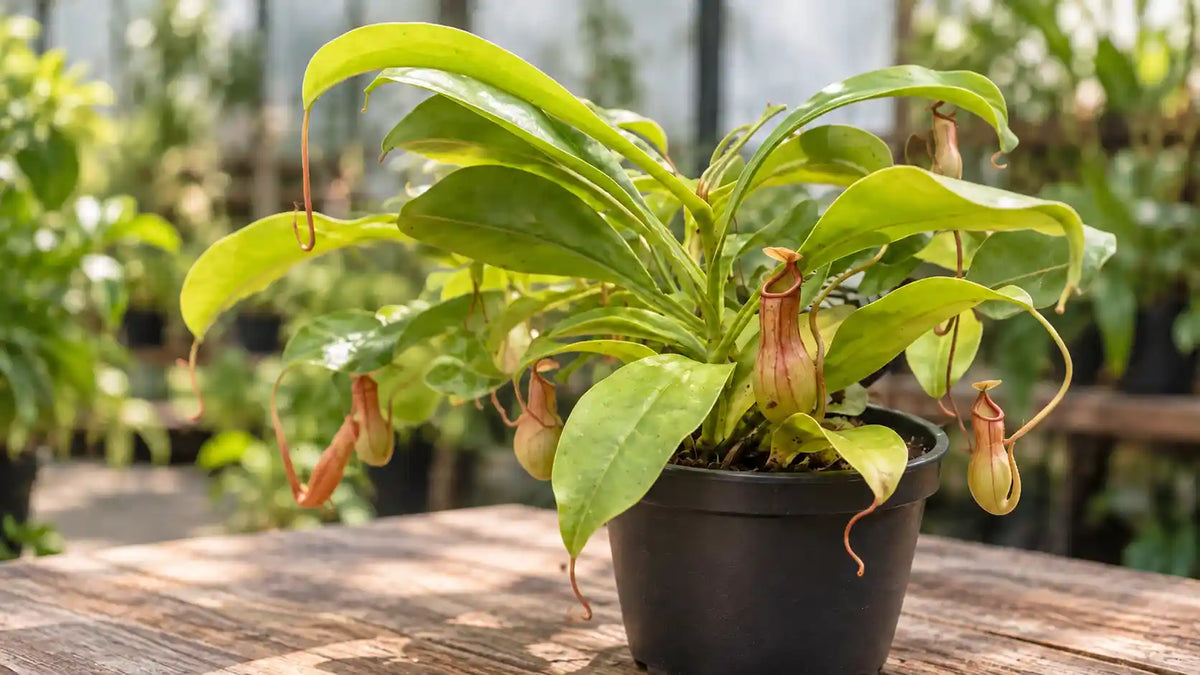
Nepenthes are tropical plants, and humidity can influence how easily many of them grow and hold pitchers. But humidity is only one part of the environment. A plant in poor light, overheated media, or damaged roots will not be fixed by a humidifier alone.
There is no universal humidity number
Different Nepenthes species and hybrids come from different habitats and have different tolerances. Many common nursery hybrids adapt to ordinary household humidity better than demanding species. Rather than treating one percentage as mandatory, watch how your particular plant responds.
Stability is important
A sudden move from a humid greenhouse or shipping bag into dry indoor air can cause existing pitchers to brown or stop developing. That does not automatically mean the plant is dying. New leaves produced in your conditions are more useful for judging whether the plant is adapting.
If your home becomes especially dry in winter, grouping plants, using a room humidifier, or growing humidity-sensitive plants in a controlled enclosure can help. Avoid sealing plants into stagnant, overheated air just to raise humidity.
Humidity and airflow work together
Higher humidity does not mean zero airflow. Gentle air movement helps leaves dry after splashing and reduces stagnant conditions around dense growth. The goal is not a windy plant, just an environment that does not stay stale.
Do not confuse humidity with watering
High air humidity does not replace root-zone moisture, and wet media does not create healthy humidity by itself. Nepenthes generally prefer an airy medium that stays moist without becoming a compact, oxygen-poor swamp.
Practical signs
- New pitchers that repeatedly abort can be associated with environmental stress, including low humidity, but also light, temperature, root health, or recent change.
- Pitcher loss immediately after shipping is common acclimation stress.
- Steady new leaves and new pitchers are better indicators of success than one humidity reading.
For most growers, aim for a stable environment the plant can actually live in long term instead of constantly chasing a perfect meter reading.