
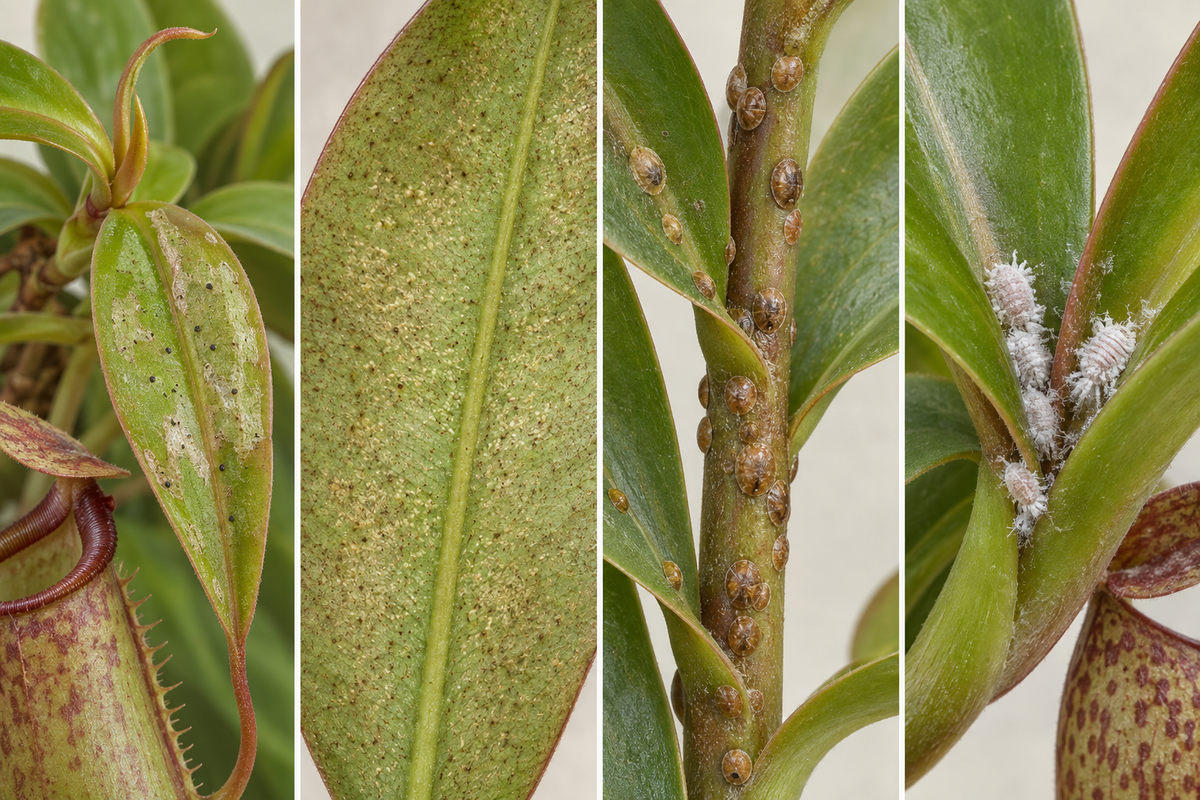
Nepenthes pest identification table
| Pest | Where to look | Typical clues |
|---|---|---|
| Thrips | Growing point, rolled new leaves, flowers, and tender pitchers | Silvery scars, distorted growth, and tiny black fecal specks; adults may move quickly when disturbed. |
| Mites | Leaf undersides and the newest growth | Fine pale stippling, bronzing, distorted leaves, and sometimes webbing. Many are difficult to see without magnification. |
| Scale | Stems, leaf midribs, tendrils, and sheltered crevices | Fixed tan or brown bumps; some species produce sticky honeydew. |
| Mealybugs | Leaf axils, stem joints, pot rim, and roots | White waxy clusters or cottony material, often with sticky residue. |

AI-generated educational illustration: representative clues for thrips, mites, scale, and mealybugs. Confirm live pests with close inspection before treating.
A five-minute inspection
- Move the plant away from the collection before treatment.
- Use bright light and a 10× hand lens if available.
- Tap a suspect leaf over white paper; moving dark specks can reveal thrips.
- Check the newest folded leaf, both leaf surfaces, the stem, tendrils, pitchers, pot rim, and drainage holes.
- Photograph the same growing point each week. Old scars remain after treatment, so clean new growth is the best progress marker.
Treatment principles
Begin with isolation and physical removal where practical. A cotton swab or water rinse can reduce visible scale and mealybugs, but hidden insects and eggs may require repeated follow-up. For any pesticide, identify the pest first, use a product whose label allows the crop and application site, follow the label interval, and test a small area before treating a valuable collection. Do not increase concentration or combine products unless the label specifically permits it.
Avoid spraying oil- or soap-based products on a hot, brightly lit plant. Treat during the cooler part of the day and watch for leaf burn. Because life cycles overlap, one treatment rarely proves the infestation is gone; continue inspections for several weeks.
Nepenthes can get many of the same sap-feeding pests found on other greenhouse and houseplants. The sooner you notice a problem, the easier it is to keep it from spreading through a collection.
Thrips
Thrips can damage tender new growth and may leave distorted leaves, pale or silvery feeding scars, or tiny dark specks. Because they hide in tight growth, a casual glance at an older leaf may miss them.
Mites
Spider mites and related mites can cause fine stippling, bronzing, distorted growth, or webbing in heavier infestations. Some mites are extremely small, so a hand lens can be useful when symptoms do not have an obvious cause.
Scale and mealybugs
Scale insects may look like small fixed bumps on stems or leaves. Mealybugs are easier to recognize by their white waxy appearance and tendency to collect in leaf axils and protected crevices. Sticky honeydew can occur with some sap-feeding insects.
What to do first
- Move the affected plant away from the rest of the collection.
- Inspect the growing point, leaf undersides, stem, tendrils, pot rim, and nearby plants.
- Remove obvious pests manually when practical.
- Clean the growing area and continue checking neighboring plants.
Using pesticides safely
Carnivorous plants can react differently to pesticide formulations, and labels vary by product and location. Use only a product labeled for the pest and application site, follow the label exactly, and test cautiously on valuable plants before treating an entire collection when practical. Do not mix products or increase concentration because a pest looks severe.
Strong overall culture also matters. Adequate light, appropriate moisture, airflow, and quarantine of new plants make pest problems easier to detect and manage. A damaged leaf will not heal after the pest is gone, so judge treatment success by clean new growth and the absence of live pests.
Related guides
- Nepenthes Care Guide
- Nepenthes Leaves Turning Red, Yellow, or Brown
- Nepenthes Acclimation After Shipping
- Shop Carnivorous Plants
Browse the complete Carnivorous Plant Library for species care, propagation, water, soil, dormancy, and troubleshooting guides.