
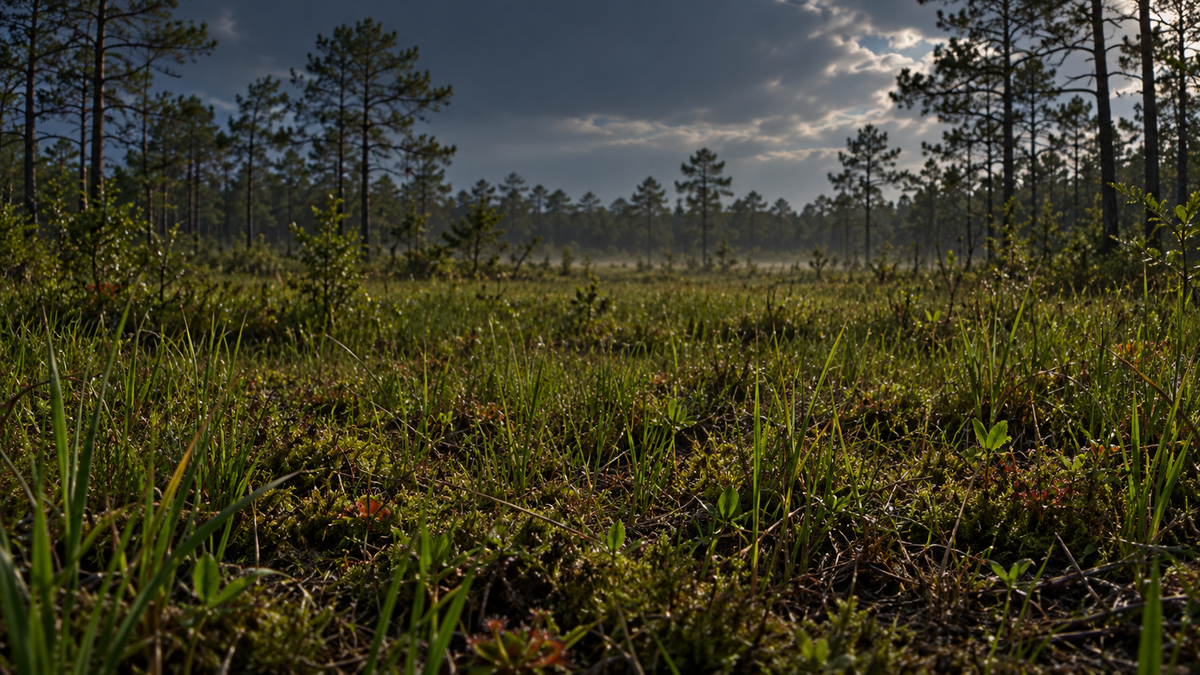
Venus flytraps are temperate plants native to the coastal plain of North and South Carolina. In outdoor cultivation that follows natural seasons, shorter days and cooler temperatures cause growth to slow during winter.
What does dormancy look like?
A dormant flytrap can look smaller and less dramatic than it did in summer. Older traps blacken, leaf growth stays close to the soil, and the plant produces fewer or smaller traps. The underground rhizome remains alive even when much of the visible foliage looks tired.
Dormant does not mean dry and forgotten
The media should not be allowed to become bone dry. At the same time, cool dormant plants generally use water more slowly than actively growing summer plants, so avoid blindly maintaining the same evaporation-based routine. Keep the medium appropriately moist and watch for stagnant, decaying conditions.
Light still matters
If the plant is wintering outdoors in a suitable climate, give it normal seasonal light. If it is protected in a cold frame or similar setup, do not place it in total darkness unless you are deliberately following a specific storage method.
What about indoor flytraps?
There are successful controlled indoor methods that keep Venus flytraps growing under strong artificial light with regular feeding rather than giving them a conventional outdoor dormancy. That is different from placing a flytrap on a dim warm windowsill all winter. If you choose continuous indoor culture, the plant still needs enough light and nutrition to maintain active growth.
Spring recovery
As days lengthen and temperatures rise, new growth should strengthen. Remove fully dead material carefully and resume a more active watering routine as growth and evaporation increase.
The important point is consistency: either provide a sensible seasonal outdoor cycle for temperate cultivation or use a proven high-light indoor system. Weak winter light plus warm temperatures is not a substitute for either approach.