
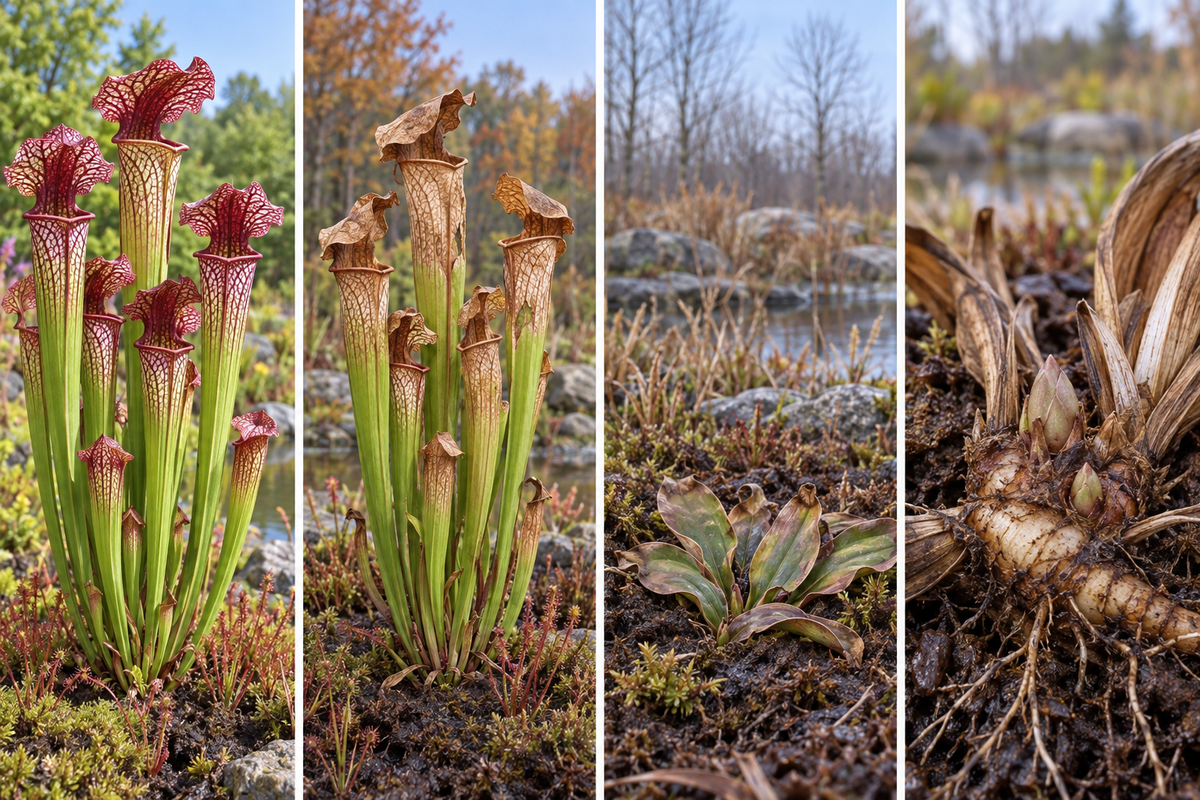
Quick answer: healthy Sarracenia normally receive a cool winter rest with shorter days. Many growers aim for roughly three to four months of cool conditions; repeated temperatures around 35–50°F (2–10°C) are commonly useful, but the right protection depends on species, local climate, and whether the plant is in a pot or in the ground.
Winter symptom guide
| What you see | Normal or concerning? | What to do |
|---|---|---|
| Older pitchers slowly brown from the top | Usually normal aging | Leave green tissue; trim mostly dead leaves with clean tools. |
| Short, flat phyllodia replace pitchers | Normal for some species and hybrids | Keep the plant in strong light and continue seasonal care. |
| Firm rhizome with little top growth | Normal dormancy | Keep the medium damp and wait for spring cues. |
| Soft brown rhizome, bad smell, or rapidly collapsing crown | Concerning for rot | Reduce stagnant conditions and inspect the rhizome promptly. |
| Pot freezes solid for prolonged periods | Risk varies by species and container exposure | Protect the pot from severe sustained cold without moving it into a warm, dim room. |
| Warm indoor growth becomes pale and floppy | Insufficient seasonal light and rest | Plan a cooler, brighter dormancy appropriate to the plant and climate. |

AI-generated educational illustration: normal seasonal Sarracenia changes and a healthy rhizome crown. Softness, foul odor, or rapidly spreading collapse are not normal dormancy.
Outdoor, garage, or refrigerator?
In a climate similar to the plant’s natural range, outdoor dormancy is usually simplest. In colder regions, an unheated garage, cold frame, or sheltered outdoor position can protect containers from the worst freezes while preserving cool temperatures and short days. Refrigerator dormancy is a last-resort method for growers who cannot provide safe cool conditions; it requires careful sanitation, moisture control, and monitoring, so it should not be the default for a plant that can overwinter naturally.
Monthly winter checklist
- Confirm the medium is damp, not bone dry or foul and stagnant.
- Remove only fully dead material that traps mold or blocks airflow.
- Check the rhizome crown for firmness.
- Protect pots before severe prolonged freezes.
- Watch for an early warm spell followed by a hard freeze.
- Increase water and sun exposure as spring growth resumes.
Sarracenia are temperate North American pitcher plants. In climates that match their seasonal cycle, they grow strongly through spring and summer and slow down as day length and temperatures fall.
What dormancy looks like
Pitchers that were attractive in summer may brown, flatten, or stop being replaced. Some species produce non-carnivorous leaves called phyllodia. The underground rhizome remains alive and stores energy for spring growth.
Do not expect a winter plant to look like a summer plant
Removing every pitcher the moment it develops a brown tip is unnecessary. Green tissue can still photosynthesize. Once leaves are mostly or completely dead, they can be trimmed away with clean tools to improve airflow and make room for spring growth.
Winter moisture
Sarracenia naturally grow in wet habitats, but cool dormant plants use water more slowly than actively growing summer plants. Keep the root zone from drying out while avoiding stagnant conditions that encourage rhizome rot. Exact tray depth and frequency should be adjusted to climate, pot size, and rainfall rather than copied blindly from a hot summer routine.
Cold tolerance varies
Species come from different parts of the southeastern United States, so their tolerance for prolonged hard freezes is not identical. Container plants can also freeze more deeply than plants rooted in the ground. Growers in very cold regions may need protection that would be unnecessary in the plant's native range.
Spring transition
As temperatures rise and days lengthen, flower buds and new pitchers emerge. Increase water availability as growth and evaporation increase, return plants to strong sun if they were protected, and watch for aphids or other pests on tender new growth.
The safest winter plan is based on your species and local climate. The important principle is that Sarracenia are not tropical houseplants that should be kept warm and actively growing in weak indoor light all winter.
Related guides
- Sarracenia Care Guide
- Sarracenia Pitchers Turning Brown
- Sarracenia Rhizome Division
- Best Water for Carnivorous Plants
Browse the complete Carnivorous Plant Library for species care, propagation, water, soil, dormancy, and troubleshooting guides.